

How to Verify a General Contractor’s Credentials in the Bay Area
Remodeling your home is a major investment of your time, money, and trust. Handing over the keys to your property requires absolute confidence in the team you hire. Unfortunately, many homeowners face delays, hidden costs, or subpar workmanship simply because they skipped crucial verification steps before starting their project.
If you plan to remodel your kitchen, add an extension, or build a custom home, you must know how to vet your builder properly. This guide will walk you through the essential steps to verify a contractor’s credentials. You will learn how to check state licenses, confirm insurance coverage, understand local permitting rules, and lock down a secure contract.
Here is everything you need to know to make an informed, confident decision.
Why Vetting General Contractors in the Bay Area Matters
The Bay Area features unique architectural styles, stringent building codes, and varied terrain. Building or remodeling here requires specific expertise. Hiring an unverified builder can lead to code violations, financial liability, or unfinished projects.
Taking the time to verify credentials protects you from fraud and ensures your project meets local safety standards. A reputable general contractor will gladly share their license numbers, insurance certificates, and references. If a company hesitates to provide this information, consider it a major red flag.
Start with the California State License Board (CSLB)
In California, any construction project costing more than $500 for labor and materials requires a licensed contractor. The California State License Board (CSLB) regulates these professionals to protect consumers.
Checking the CSLB website should always be your first step. When you ask a builder for their license number, enter it into the CSLB database.
Here is what you need to look for on the CSLB portal:
- Active Status: Ensure the license is currently active and not suspended or expired.
- Classification: Verify they hold the correct license for your project. A “B” General Building Contractor license is standard for major remodeling work.
- Personnel: Check that the name on the license matches the person you are communicating with.
- Complaint History: Look for any past disciplinary actions, citations, or unresolved consumer complaints.
A clean CSLB record demonstrates that the builder operates legally and adheres to state regulations.
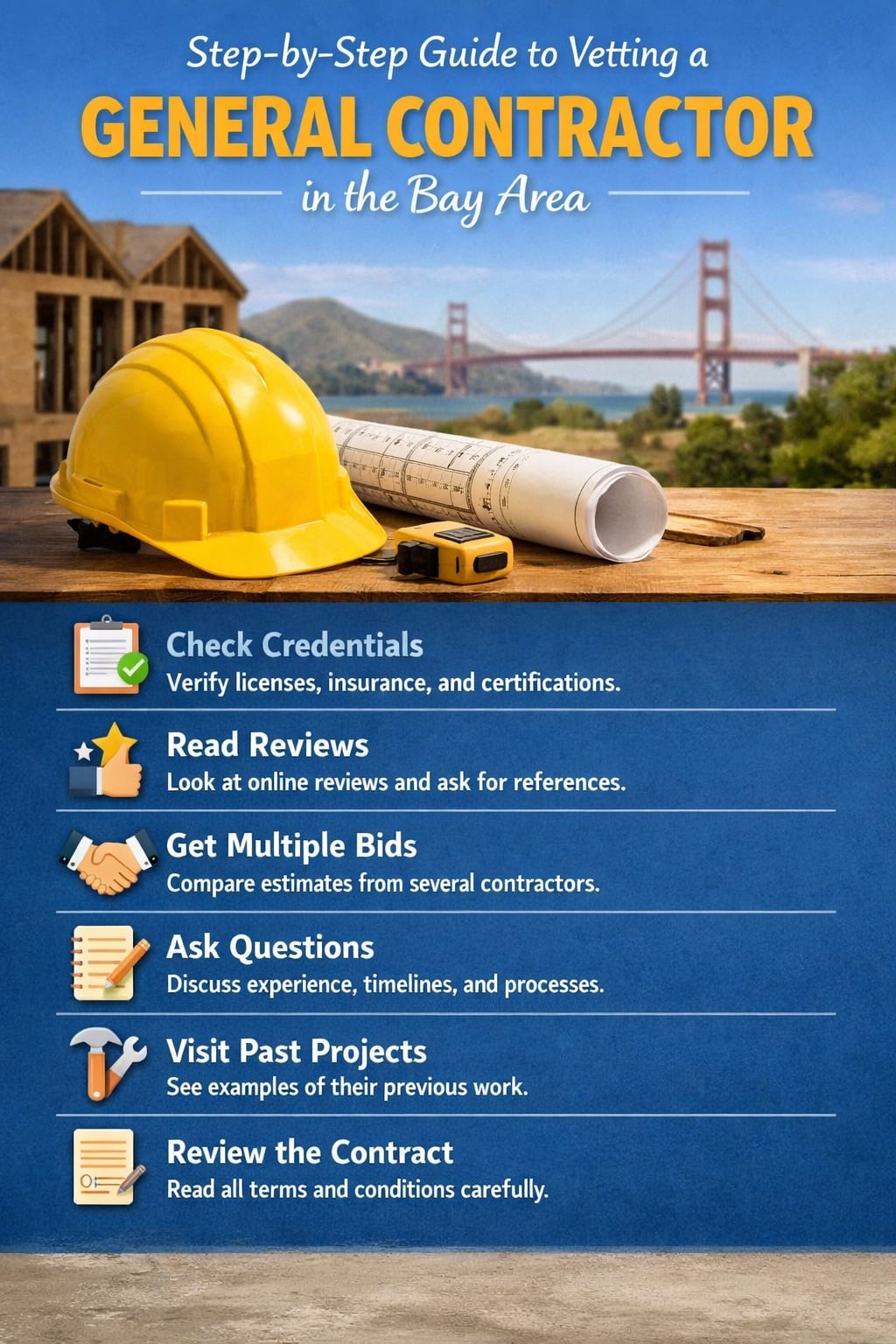
Verify Insurance Coverage and Bonding
A valid license is only part of the equation. Proper insurance and bonding protect you from financial ruin if things go wrong on your property. Never assume a company is fully insured just because they say they are. Always ask for proof.
General Liability Insurance
General liability insurance covers property damage or bodily injury caused by the general contractor or their crew. If a worker accidentally damages your neighbor’s fence or breaks a major water pipe, this policy covers the costs. Ask for a certificate of insurance and call the provider to verify the policy is active.
Workers’ Compensation Insurance
If a general contractor has employees, California law requires them to carry workers’ compensation insurance. This protects you if a worker gets injured on your property. Without it, the injured worker could sue you for medical bills and lost wages. If a contractor claims they are exempt, verify that they genuinely have no employees and will not use uninsured subcontractors.
Surety Bonds
Licensed general contractors in California must carry a contractor’s bond (currently $25,000). A bond acts as a financial guarantee. If the general contractor violates license laws, abandons the project, or fails to pay subcontractors, you can file a claim against the bond to recover some of your losses.
Understanding Local Permits and Bay Area Regulations
The San Francisco Bay Area is famous for its strict building codes. Seismic safety requirements, energy efficiency standards, and historical preservation rules vary greatly from one city to the next.
A qualified professional handles the permitting process for you. They understand local zoning laws and maintain relationships with city inspectors.
When interviewing candidates, ask about their experience with your specific city’s planning department. Beware of any general contractor who asks you to pull the permits yourself as an “owner-builder.” This legally transfers all liability and responsibility for code compliance directly onto your shoulders. Reputable home remodeling companies will always pull the permits under their own license.
Reviewing Portfolios of General Contractors in the Bay Area
Credentials prove a company is legally allowed to operate, but a portfolio proves they can deliver quality work. You need to verify their craftsmanship and reliability before signing an agreement.
When evaluating past work, do not just look at glossy photos on a website. Dig deeper into their track record.
- Request Recent References: Ask for contact information for three past clients who had similar projects.
- Call the References: Ask these previous clients about communication, cleanliness, adherence to schedules, and how the team handled unexpected issues.
- Visit Active Job Sites: If possible, ask to visit a current project. This allows you to see how they organize their workspace and manage their crew.
- Read Online Reviews: Check platforms like Yelp, Google, and the Better Business Bureau. Look for patterns in the feedback. Consistent complaints about hidden fees or poor communication are warning signs.

The Importance of Written Contracts and Payment Schedules
Never start a remodeling project based on a verbal agreement or a basic estimate. A comprehensive written contract is your ultimate protection. It sets clear expectations and legally binds both parties to specific terms.
According to California law, home improvement contracts must include specific clauses and notices. Make sure your contract covers the following elements:
Detailed Scope of Work
The contract should outline exactly what the project entails. It must list the specific materials, brands, model numbers, and finishes you agreed upon. Vague descriptions leave room for corner-cutting.
Clear Timelines
Your contract must state an approximate start date and an estimated completion date. While construction often faces unpredictable delays due to weather or material shortages, having a timeline keeps the project moving forward.
Legal Payment Schedules
California law strictly limits how contractors can collect payments. The down payment cannot exceed 10% of the total project cost or $1,000, whichever is less.
Subsequent payments should tie directly to project milestones, such as passing a framing inspection or completing drywall installation. Never pay for work that has not been completed, and never pay the final balance until you are completely satisfied and all city inspections have passed.
Change Order Procedures
During a remodel, you might decide to upgrade your flooring or discover hidden water damage behind a wall. Any changes to the original plan must be documented through written change orders. These documents detail the new work, the adjusted cost, and any changes to the timeline. Both you and the builder must sign them before the new work begins.
Protecting Your Investment
Verifying credentials takes time, but it is the most critical phase of your remodeling journey. By checking licenses, confirming insurance, reviewing references, and insisting on a solid contract, you safeguard your home and your finances.
Take this process step by step. A trustworthy professional will respect your diligence and happily provide all the documentation you request. They understand that a transparent relationship built on trust leads to a successful project.

Ready to Start Your Project?
Finding a reliable team does not have to be stressful. If you are searching for trusted General Contractors in the Bay Area, look no further than Bayside Builders Group. We pride ourselves on exceptional craftsmanship, transparent communication, and strict adherence to all licensing and insurance requirements.
Our team guides you through every step of the remodeling process, ensuring your project is completed to perfection. We handle the permits, maintain a safe job site, and provide detailed contracts so you know exactly what to expect.
Contact Bayside Builders Group today to discuss your vision and discover how we can transform your house into the home of your dreams.
Over 25 Years Of Experience!
Frequently Asked Questions
What is the CSLB and why does it matter?
The California State License Board (CSLB) regulates construction professionals to protect consumers. Any project costing over $500 for labor and materials legally requires a licensed professional. Verifying a license through the CSLB ensures your team meets state requirements and operates legally.
How do I check an active license status?
You can verify a license by visiting the CSLB website and entering the license number provided by your builder. The database will show you if the license is active, expired, or suspended. It also displays the license classification and any history of consumer complaints.
What type of license should my home remodeling team hold?
For major home renovations, room additions, or custom home builds, the team must hold a “B” General Building Contractor license. This specific classification allows them to oversee multiple trades, such as plumbing, electrical, and carpentry, under one comprehensive project.
What should I do if a builder has a history of CSLB complaints?
You should proceed with extreme caution if a company has unresolved citations or a history of disciplinary actions on its CSLB record. We highly recommend finding a different team with a clean record to ensure a safe and smooth remodeling experience.
What is general liability insurance for construction projects?
General liability insurance covers property damage and bodily injury caused by the construction crew. If a worker accidentally damages a neighboring property or breaks a main water line, this policy covers the repair costs. Always ask for a certificate of insurance to verify coverage.
Why is workers' compensation insurance necessary?
California law requires any company with employees to carry workers’ compensation insurance. This protects you from financial liability if a worker gets injured on your property. Without this coverage, an injured worker could sue you directly for medical bills and lost wages.
What happens if I hire an uninsured team?
Hiring an uninsured team puts your personal finances at massive risk. You become completely liable for any accidents, injuries, or property damage that occur during the project. Reliable General Contractors in the Bay Area, like Bayside Builders Group, always maintain full insurance coverage to protect their clients.
How should payment schedules be structured?
Payments should tie directly to specific project milestones. You might pay a portion after the framing inspection passes, and another portion after drywall installation. You should never pay for incomplete work, and you must hold the final payment until you are completely satisfied with the finished product.
🚀 Ready to Start Your Dream Remodel?
Whether you’re planning a bathroom remodel, kitchen remodel, building an ADU, or upgrading your outdoor space, our expert team is here to help.
📞 Call us at (510) 901-9972 or fill out the form below to get started: