
How to Find the Best General Contractor in the Bay Area in 2026
Finding the right partner for your renovation project is more critical than ever. The difference between a dream home and a construction nightmare often comes down to one decision: who you hire. This guide will walk you through everything you need to know to find the best general contractor in the Bay Area in 2026, ensuring your project is built to last, on time, and within budget.
Why Hiring the Right General Contractor in the Bay Area Matters
The Bay Area presents unique challenges that don’t exist in other parts of the country. From navigating complex seismic codes to understanding microclimates that affect material choices, local expertise is non-negotiable. A qualified general contractor in the Bay Area understands the nuances of working in this specific market.
In 2026, the stakes are even higher. Labor shortages in the skilled trades have stabilized somewhat, but demand remains high. Materials costs fluctuate, and energy efficiency standards are stricter than ever. A seasoned contractor acts as your project manager, advocate, and expert guide, helping you navigate these hurdles seamlessly. They don’t just swing hammers; they manage the logistics, permits, and timeline that keep your project on track.
Key Trends Shaping Bay Area Construction in 2026
Before you start interviewing candidates, it helps to understand what is driving the industry this year. The best general contractor in the Bay Area will be well-versed in these 2026 trends and ready to implement them in your home.
Sustainable Building and Carbon Neutrality
California has long been a leader in environmental policy, and 2026 sees a continued push toward carbon-neutral homes. Homeowners are increasingly requesting sustainable materials like reclaimed wood, recycled steel, and low-VOC paints. Beyond materials, there is a heavy focus on electrification, replacing gas appliances with induction cooktops and heat pump systems. Your contractor should be knowledgeable about the latest green building codes and rebate programs available for energy-efficient upgrades.
Advanced Smart Home Integration
Smart homes have graduated from simple voice assistants to fully integrated ecosystems. In 2026, renovations often involve hardwiring for advanced automation systems that control lighting, climate, security, and energy usage. A forward-thinking general contractor in the Bay Area will know how to collaborate with low-voltage electricians and integrators to ensure your home’s “brain” is as well-built as its bones.
Adaptive Reuse and ADUs
With housing density remaining a hot topic, Accessory Dwelling Units (ADUs) continue to be a massive trend. Whether it’s a garage conversion or a backyard cottage, homeowners are maximizing their lot usage. However, regulations regarding ADUs vary significantly between cities like Berkeley, San Jose, and Oakland. You need a builder who stays up-to-date on the changing zoning laws to maximize your property’s potential legally.
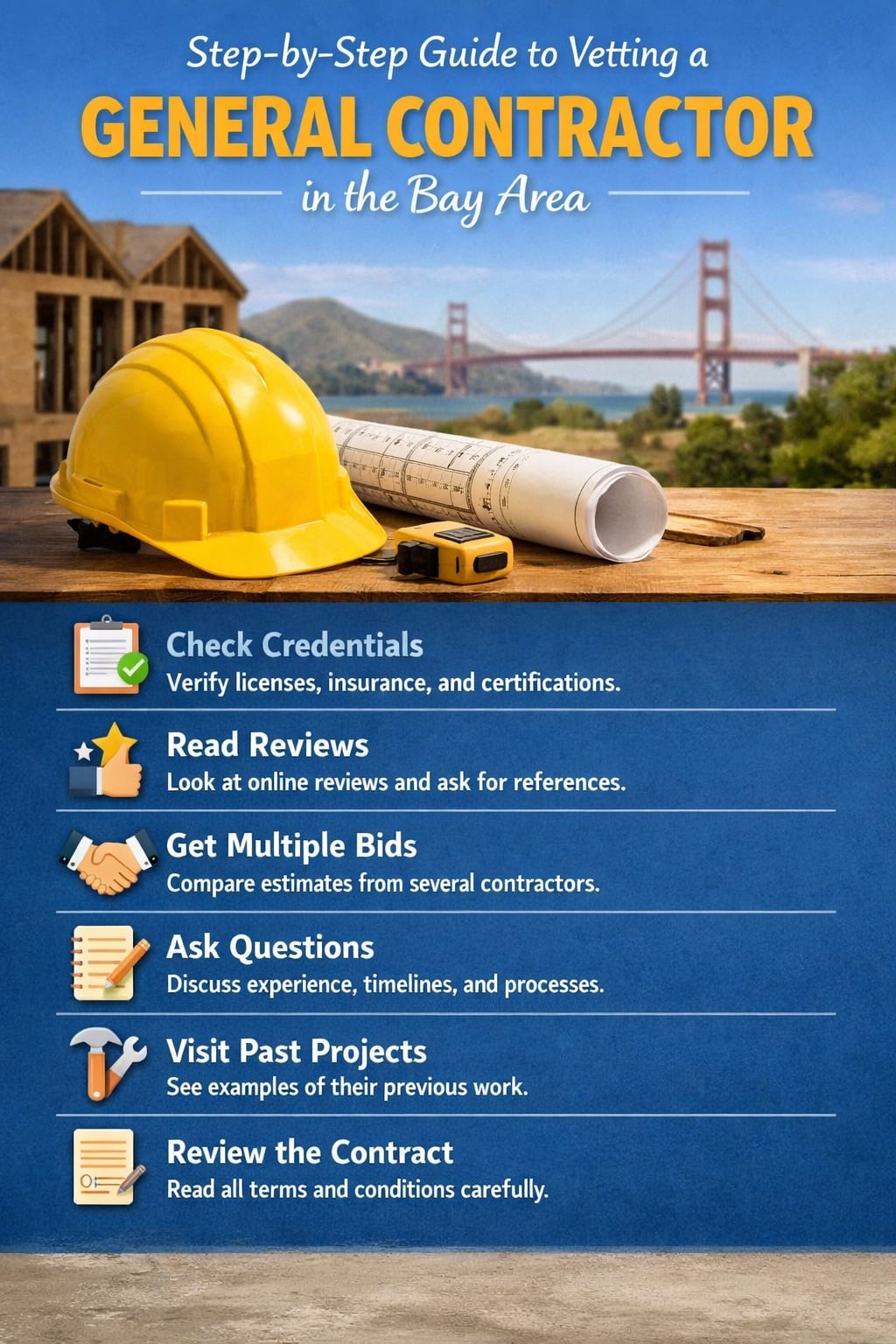
Step-by-Step Guide to Vetting a General Contractor in the Bay Area
Finding the right professional involves more than a Google search. It requires a systematic approach to vetting. Here is your roadmap for 2026.
Step 1: Define Your Scope and Budget Clearly
Before you reach out to anyone, know what you want. Are you remodeling a kitchen, adding a second story, or building from scratch? Contractors specialize in different types of projects. Having a clear scope of work and a realistic budget helps you filter out companies that aren’t a good fit.
Step 2: Sourcing Candidates
Start with referrals. Ask friends, family, and neighbors who have had work done recently. Local real estate agents and architects are also excellent resources, as they maintain networks of reliable professionals. Online directories can be useful, but personal recommendations are gold. Aim to create a shortlist of 3-5 candidates.
Step 3: Verify Licenses and Insurance
Never skip this step. In California, any project over $500 (labor and materials combined) requires a licensed contractor.
- Check the License: Visit the California Contractors State License Board (CSLB) website. Enter the contractor’s license number to ensure it is active and in good standing. Look for “B – General Building Contractor” classification for major renovations.
- Verify Insurance: Ask for proof of general liability insurance and workers’ compensation insurance. This protects you from liability if an accident occurs on your property.
Step 4: The Interview Process
Once you have verified their credentials, schedule site visits. Pay attention to how they communicate. Are they punctual? Do they listen to your ideas? Do they ask insightful questions?
Key questions to ask during the interview:
- How long have you been working as a general contractor in the Bay Area?
- Have you completed projects similar to mine recently?
- Who will be the day-to-day project manager on site?
- How do you handle change orders or unexpected costs?
- What is your current workload, and when could you realistically start?
Step 5: Reviewing Portfolios and References
Don’t just look at the glossy photos on their website. Ask for references from past clients, specifically those from projects completed in the last 12-18 months.
When calling references, ask:
- Did the project stay on budget?
- Was the site kept clean and safe?
- How was the communication throughout the project?
- Would you hire them again?
Step 6: Understanding the Bid
You should receive detailed written estimates from your top choices. Avoid lump-sum bids that just say “Kitchen Remodel: $80,000.” A professional bid should break down costs for materials, labor, permits, and contingencies. If one bid is significantly lower than the others, proceed with caution; it often means they are cutting corners or have missed a key part of the scope.
Navigating Permits and Regulations in the Bay Area
One of the biggest value-adds of a top-tier general contractor in the Bay Area is their ability to navigate the bureaucracy of local building departments. The permitting process in 2026 remains complex and varies widely across cities.
The Permit Process
San Francisco, for example, is notorious for its rigorous planning review process, especially for exterior changes or historical properties. A contractor who works primarily in the East Bay might not be familiar with the specific hurdles of San Francisco or Marin County.
2026 Code Updates
Building codes are updated every few years. The 2025/2026 code cycle likely includes stricter requirements for energy conservation and fire safety, particularly in Wildland-Urban Interface (WUI) zones. Your contractor must ensure that all plans meet these current standards to avoid costly delays during inspections. Failure to pull proper permits can result in fines, forced removal of work, and issues when trying to sell your home in the future.
Red Flags to Watch Out For
As you search for a general contractor in the Bay Area, be on the lookout for common warning signs.
High Upfront Payments
In California, a contractor cannot legally ask for a down payment of more than 10% of the contract price or $1,000, whichever is less. If a contractor asks for 50% upfront to “buy materials,” walk away immediately.
Lack of a Written Contract
Handshake deals have no place in construction. A professional contractor will provide a detailed contract outlining the scope of work, payment schedule, timeline, and warranty information.
“I Can Start Tomorrow”
Good contractors are busy. While scheduling gaps happen, a contractor who is immediately available for a major project might be struggling to find work for a reason. A wait of a few weeks or months is often a sign of a reputable business.
Pressure Tactics
Avoid anyone who pressures you to sign a contract immediately to “lock in a price.” You should have time to review the agreement and consult with a legal professional if necessary.
The Importance of Communication and Chemistry
Renovations are invasive. You are inviting a team of strangers into your personal space for weeks or months. Beyond technical skills, you need to hire someone you trust and can communicate with effectively.
The best general contractor in the Bay Area will prioritize transparency. They will use project management software to keep you updated on progress, selections, and budget tracking. They will be honest about delays, which are sometimes inevitable due to weather or supply chain issues, rather than making empty promises.
Trust your gut. If you feel uncomfortable or dismissed during the initial meetings, it is unlikely to improve once the walls come down. Look for a partner who respects your vision and your home.

Budgeting for Your Bay Area Renovation
Construction costs in the Bay Area are among the highest in the nation. In 2026, pricing reflects the high cost of living for skilled labor and the price of premium materials.
Contingency Funds
Always set aside a contingency fund of 10-15% of your total budget. In older Bay Area homes, it is common to uncover dry rot, outdated electrical wiring, or plumbing issues once demolition begins. Having a financial buffer prevents these surprises from derailing the project.
Value Engineering
If your quotes come in higher than expected, a good contractor can help you “value engineer” the project. This means suggesting alternative materials or design tweaks that achieve a similar look and function at a lower cost. For example, opting for high-quality quartz countertops instead of exotic marble, or keeping the existing plumbing layout rather than moving fixtures across the room.
Why Local Experience Wins Every Time
We cannot stress enough the importance of hiring a truly local general contractor in the Bay Area. Someone who operates primarily in Sacramento or the Central Valley may offer lower rates, but they often lack the local subcontractor network (plumbers, electricians, framers) needed to keep a job moving smoothly.
Local contractors have established relationships with local suppliers, allowing them to often get materials faster. They know the local inspectors by name and understand what they look for, leading to smoother inspections and sign-offs. They are invested in the community because their reputation depends on it.

Conclusion: Building Your Future with Confidence
Embarking on a construction project is a journey. It requires patience, planning, and the right team. By following these vetting steps and focusing on qualifications, communication, and local expertise, you can find a partner who will bring your vision to life.
In 2026, a great contractor does more than build walls; they build trust. They ensure your home is safe, sustainable, and tailored to your lifestyle. Don’t settle for “good enough” when it comes to your biggest asset.
Get In Touch For A FREE Quote!
If you are looking for a reliable, experienced, and forward-thinking partner for your next renovation, look no further. Bayside Builders Group is a premier general contractor in the Bay Area committed to excellence in every project we undertake. From concept to completion, we handle the details so you can enjoy the transformation.
Contact Bayside Builders Group today to schedule your consultation, and let’s build something extraordinary together.
Over 25 Years Of Experience!
Frequently Asked Questions
Why is it so important to hire a local general contractor in the Bay Area?
Hiring a local general contractor in the Bay Area is crucial because the region has specific microclimates, seismic requirements, and zoning laws that outsiders may not understand. A local professional has established relationships with area subcontractors and suppliers, which helps keep projects on schedule. They are also familiar with the nuances of local building departments, from San Francisco to San Jose, ensuring a smoother permitting process.
How have building codes changed for Bay Area renovations in 2026?
The 2025/2026 code cycle includes stricter standards for energy efficiency and fire safety. Key updates often focus on electrification (moving away from gas appliances), tighter insulation requirements, and specific mandates for homes in Wildland-Urban Interface (WUI) zones. Your contractor must be up-to-date on these changes to ensure your renovation passes all inspections and avoids costly delays.
What steps should I take to vet a contractor before hiring them?
We recommend a six-step process:
- Define your scope: Know exactly what you want to build or remodel.
- Source candidates: Get referrals from friends, neighbors, or local real estate agents.
- Verify credentials: Check their license status on the CSLB website and ask for proof of insurance.
- Interview: Assess their communication style and availability.
- Check references: Speak to past clients about their experience.
- Review the bid: Ensure you get a detailed written estimate, not just a lump sum.
Can I add an Accessory Dwelling Unit (ADU) to my property in 2026?
Yes, ADUs remain a popular trend in 2026 for maximizing property value and housing density. However, regulations regarding size, setbacks, and permitting vary by city. While state laws encourage ADUs, local ordinances in cities like Berkeley or Oakland have specific requirements. A knowledgeable general contractor can help you navigate these rules to design a compliant and functional space.
How much should I budget for a contingency fund?
We strongly recommend setting aside a contingency fund of 10-15% of your total project budget. In the Bay Area, especially with older homes, it is common to uncover hidden issues like dry rot, outdated electrical wiring, or old plumbing once walls are opened. This financial buffer ensures these surprises don’t derail your project’s progress.
What are the red flags I should look out for when hiring a contractor?
Be wary of contractors who ask for large upfront payments (more than 10% or $1,000), lack a written contract, or pressure you to sign immediately. Additionally, if a contractor says they can start “tomorrow” for a major project, it may indicate a lack of steady work. Professionalism, transparency, and a reasonable wait time are usually signs of a reputable business.
How do I verify a contractor's license in California?
You can verify a license by visiting the California Contractors State License Board (CSLB) website. Enter the contractor’s license number to confirm it is active and in good standing. For major renovations, you typically want to look for a “B – General Building Contractor” classification.
What should be included in a professional construction bid?
A professional bid should be detailed and transparent. It should break down costs for materials, labor, permits, and contingencies. Avoid accepting a single “lump sum” number without explanation. A detailed bid allows you to see exactly where your money is going and helps you compare quotes from different contractors accurately.
🚀 Ready to Start Your Dream Remodel?
Whether you’re planning a bathroom remodel, kitchen remodel, building an ADU, or upgrading your outdoor space, our expert team is here to help.
📞 Call us at (510) 901-9972 or fill out the form below to get started: